

If you’re taking Ozempic, Wegovy, or Mounjaro for weight loss, knowing the GLP-1 diet is key. These meds mimic a hormone that controls hunger and how much we eat.
Thank you for reading this post, don't forget to subscribe!The ozempic diet plan and food choices for Wegovy and Mounjaro aim to work well with these meds. They help with lasting weight loss and better health.
Following a good glp-1 diet can help you reach your weight loss goals. It also helps reduce side effects.
Key Takeaways
- Understanding the GLP-1 diet is essential for individuals using Ozempic, Wegovy, and Mounjaro.
- A well-planned diet can help achieve sustainable weight loss.
- Food options should complement the effects of these medications.
- A GLP-1 diet can help minimize possible side effects.
- Consulting a healthcare professional is recommended for personalized dietary advice.
Understanding GLP-1 Medications
GLP-1 medications are a great option for those trying to lose weight. GLP-1, or Glucagon-Like Peptide-1, helps control hunger and blood sugar levels.
How Ozempic, Wegovy, and Mounjaro Work
Ozempic, Wegovy, and Mounjaro mimic the natural GLP-1 hormone. They boost insulin production, reduce glucagon release, and slow down stomach emptying. This helps manage blood sugar and aids in weight loss.
Differences Between These Medications
Ozempic, Wegovy, and Mounjaro have similar actions but differ in use and dosage. Ozempic mainly treats type 2 diabetes. Wegovy is for weight loss. Mounjaro helps with diabetes and also promotes weight loss.
Expected Weight Loss Results
Studies show GLP-1 meds can lead to significant weight loss. People using these drugs can lose 10% to 15% of their body weight. The exact loss depends on the drug and dosage.
How GLP-1 Medications Affect Your Appetite and Digestion
It’s important to know how GLP-1 receptor agonists work to improve appetite and digestion. Medications like Ozempic, Wegovy, and Mounjaro help manage weight. They do this by affecting both hunger and digestion.
The Science Behind Appetite Suppression
GLP-1 medications mimic a natural hormone in our bodies. This hormone targets the brain’s appetite centers. As a result, we feel less hungry and more full. Appetite suppression makes it easier to stick to our diets.
Changes in Gastric Emptying
GLP-1 medications slow down how fast food leaves the stomach. This means food stays longer, making us feel full for longer. It can also help us eat less often.
Impact on Hunger Hormones
These medications also affect hunger hormones like ghrelin and leptin. By changing these hormones, GLP-1 medications reduce hunger and increase feelings of fullness.
| Effect | Description | Benefit |
|---|---|---|
| Appetite Suppression | Reduced hunger due to brain signaling | Easier adherence to diet plans |
| Gastric Emptying Delay | Food stays in stomach longer | Prolonged feeling of fullness |
| Hormonal Modulation | Influence on ghrelin and leptin levels | Decreased appetite and increased satiety |
Knowing how GLP-1 medications work helps us eat better. We can use mounjaro eating tips and follow glp-1 dietitian recommendations. This way, we get the most out of our treatment.
GLP-1 Diet: What to Eat on Ozempic, Wegovy & Mounjaro
Starting GLP-1 meds like Ozempic, Wegovy, or Mounjaro means knowing the right diet is key. A good diet helps with weight loss and manages side effects. It also boosts your overall health.
Core Nutritional Principles
For those on GLP-1 meds, focus on foods rich in nutrients. Whole foods like veggies, fruits, lean proteins, and grains are essential. They help keep your weight healthy and support your metabolism.
Stay away from processed and sugary foods. They can mess with your blood sugar and insulin, making GLP-1 side effects worse.
Caloric Needs While on Medication
How many calories you need depends on your age, gender, weight, and how active you are. Cutting calories helps with weight loss. Aiming for a 500-calorie deficit can lead to losing 1 pound a week.
Talking to a healthcare provider or dietitian is key to finding the right calorie count for you.
Macronutrient Balance
Getting the right mix of macronutrients is important. Protein should be 15-20% of your daily calories, helping with muscle and feeling full. Carbs, like whole grains, should be 45-55% of your calories, for energy and fiber. Fats, like those in nuts and avocados, should be 25-35% of your calories, for heart health and feeling full.
- Protein: 15-20% of daily calories
- Carbohydrates: 45-55% of daily calories
- Fats: 25-35% of daily calories
By following these nutritional tips, you can make your diet better for health and weight loss on GLP-1 meds.
Protein-Rich Foods to Prioritize
A diet rich in protein is key for getting the most out of GLP-1 meds like Ozempic, Wegovy, and Mounjaro. Protein helps with weight loss and keeps muscle mass up, which is important when you’re eating fewer calories.
Lean Animal Protein Sources
Lean animal proteins are full of essential amino acids. Chicken breast, turkey, fish like salmon and tuna, and lean beef are great. They’re not just high in protein but also packed with iron and B vitamins.
Plant-Based Protein Options.
If you prefer or need a plant-based diet, there are many high-protein choices. Lentils, chickpeas, and black beans are full of protein and fiber. Tofu, tempeh, seitan, and protein powders from pea, hemp, or rice are also good options.
Optimal Protein Timing Throughout the Day
Spreading out your protein intake can help control hunger and keep muscles healthy. Try to have a protein source at every meal. Starting with a protein-rich breakfast can keep you full until lunch. Space out your protein to stay full and reach your health goals.
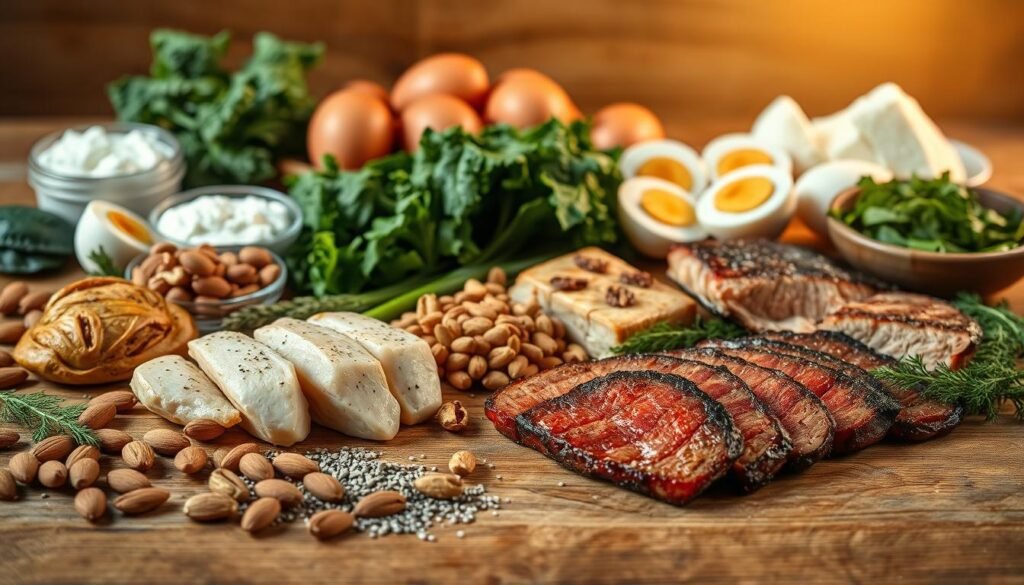
By choosing a variety of protein-rich foods and timing them right, you can boost your GLP-1 medication’s effects. This will help with weight loss and support your health goals.
Complex Carbohydrates and Fiber Sources
Complex carbohydrates are key for managing hunger and health on GLP-1 meds. They’re packed with fiber, vitamins, and minerals. This makes them a must-have for a healthy diet.
Whole Grains to Include
Whole grains are a great source of complex carbs and fiber. Try quinoa, brown rice, and whole wheat bread. They keep blood sugar stable and make you feel full.
Vegetables and Legumes
Vegetables and legumes are full of fiber and nutrients. Add leafy greens, broccoli, and legumes like lentils and chickpeas to your meals. They boost digestive health and ease some GLP-1 side effects.
How Fiber Helps with GLP-1 Side Effects
Fiber can ease GLP-1 side effects like constipation. A diet high in fiber keeps bowel movements regular. It also helps slow digestion, preventing quick blood sugar spikes.
Healthy Fats to Incorporate
When you’re on Ozempic, Wegovy, or Mounjaro, knowing about healthy fats is key. They give you energy and help your body absorb vitamins. They also keep your cells healthy.
Essential Fatty Acids
Omega-3 and omega-6 fatty acids are important for your body. They help with inflammation and heart health. Nuts and seeds, like walnuts and chia seeds, are full of these fats. Eating them can boost your health while taking GLP-1 meds.
Portion Control for High-Fat Foods
Healthy fats are good but have lots of calories. It’s important to control how much you eat. For example, a handful of nuts is about 1 ounce or 28g. Watching your portions helps keep your calorie intake in check.
Balancing Fat Intake with Reduced Appetite
GLP-1 meds can make you eat less. This can make it hard to get enough healthy fats. To fix this, eat foods that are full of healthy fats but not too much, like avocados and olive oil. Adding these to your meals can help you meet your fat needs without feeling too full.
Foods to Limit or Avoid
Knowing which foods to limit or avoid is key when taking GLP-1 medications like Ozempic, Wegovy, or Mounjaro. Making smart food choices can help reduce side effects and make the medication work better.
High-Sugar Foods and Beverages
High-sugar foods and drinks can undo the good of GLP-1 meds. They can raise blood sugar and make insulin resistance worse. Try to cut down on sugary drinks, baked goods, and candies.
Highly Processed Foods
Processed foods are bad for health and can make side effects like nausea and stomach problems worse. Choose whole, nutrient-rich foods instead to avoid these issues.
Alcohol Considerations
Drinking alcohol can affect people differently on GLP-1 meds. While some may not be harmed by a little alcohol, it can lead to problems like low blood sugar or stomach issues. Always talk to your doctor about drinking alcohol.
Foods That May Worsen Side Effects
Some foods can make side effects like nausea, diarrhea, or constipation worse. For example, fatty foods can slow digestion and make nausea worse. High-fiber foods can also make stomach problems worse. Knowing these foods can help manage side effects.
By avoiding these foods, people on GLP-1 meds can better control their condition and lessen side effects. Always get advice from a healthcare provider or a GLP-1 dietitian for the best diet plan.
Portion Sizes and Meal Planning
GLP-1 medications like Wegovy need careful meal planning and portion sizes. These meds affect how hungry you feel and how you digest food. So, you must change how you eat.
Adapting to Smaller Portions
Adjusting to eating less can be tough on a GLP-1 diet. Start by using a scale or measuring cups to measure your food.
- Begin with your usual portion size and gradually reduce it.
- Listen to your body’s hunger and fullness signals.
- Stop eating when you’re satisfied, not stuffed.
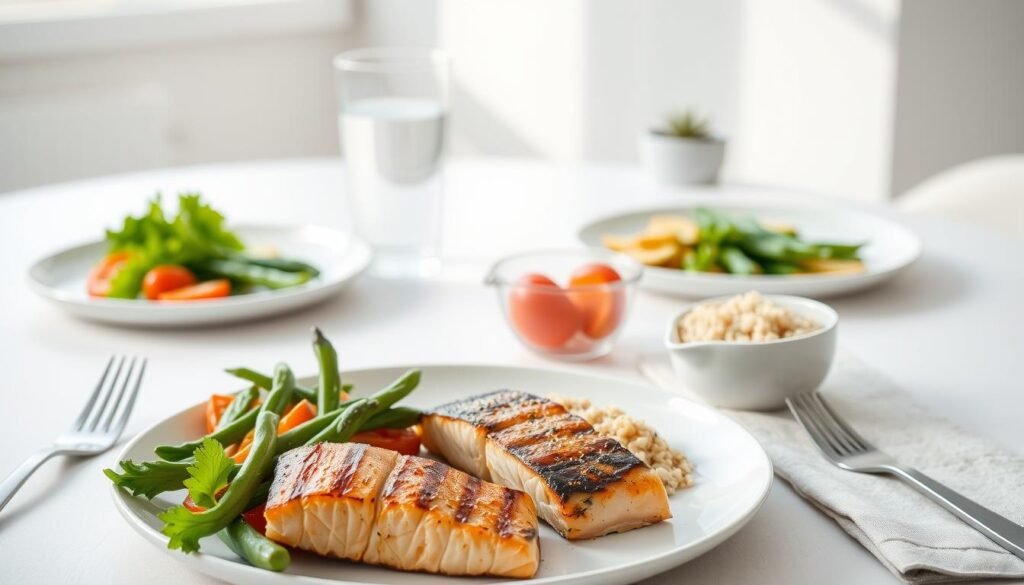
Visual Guides for Portion Control
Visual guides can help you guess portion sizes better. For example, a serving of protein should be about the size of your palm.
Meal Prep Strategies
Good meal prep is key for a GLP-1 diet. Plan meals with foods rich in nutrients like veggies, lean proteins, and whole grains.
- Cook big batches to save time later.
- Divide meals into individual servings.
- Have healthy snacks ready to avoid overeating.
Using these tips, people on GLP-1 meds can manage their food better. This helps them reach their weight loss goals.
Meal Timing and Frequency
Getting the timing and frequency of meals right is key for those on GLP-1 meds. It helps with weight loss and lessens side effects. Knowing how to eat well is important when taking Ozempic, Wegovy, or Mounjaro.
Structured Eating Schedules
Having a set eating schedule can control your hunger and aid digestion. Eat at the same times every day. This keeps your energy steady. Try having three main meals and one or two snacks in between.
Managing Early Satiety
GLP-1 meds can make you feel full too soon. To tackle this, eat foods rich in protein and fiber. Think lean meats, veggies, and whole grains. Eating smaller, more often can also help.
Medication Timing in Relation to Meals
When you take your meds with meals matters. Taking Ozempic or Mounjaro before eating can lessen nausea. Always talk to your doctor about when to take your meds.
| Meal Timing Strategy | Benefits |
|---|---|
| Eating smaller, frequent meals | Helps manage early satiety and maintain energy levels |
| Consistent meal times | Regulates appetite and improves digestion |
| Medication before meals | Can reduce nausea and improve tolerance to GLP-1 medications |
Using these tips, people on GLP-1 meds can improve their weight loss and feel better. Always get advice from a healthcare provider on meal planning and when to take your meds.
Hydration and Electrolyte Balance
Keeping your body hydrated and balanced with electrolytes is key when taking GLP-1 meds. Drinking enough water helps your health and can lessen side effects from these drugs.
Daily Water Requirements
Experts say to drink at least eight 8-ounce glasses of water daily, or the “8×8 rule.” But, your needs can change based on your age, sex, weight, and how active you are. It’s important to drink when you feel thirsty.
Signs of Dehydration
Dehydration happens when you lose more water than you take in. Look out for signs like dry mouth, dark urine, feeling tired, and dizzy. If you notice these, drink more water.
Electrolyte-Rich Foods and Beverages
Electrolytes like sodium, potassium, and magnesium are vital for your body. Eating foods high in these, like bananas and avocados, helps keep your electrolytes balanced. Also, coconut water and sports drinks are good, mainly after hard workouts.
Staying hydrated and balanced with electrolytes is a big part of a GLP-1 nutrition guide. It makes your diet plan work better. Always talk to your doctor for advice on staying hydrated and balanced while on GLP-1 meds.
Managing Common Side Effects Through Diet
Diet is key in handling side effects from GLP-1 receptor agonists. Medications like Ozempic, Wegovy, or Mounjaro can cause nausea, constipation, and taste changes. Changing your diet can help lessen these symptoms, making treatment easier.
Dietary Strategies for Nausea
Nausea is common when starting GLP-1 meds. Here are some diet tips to help:
- Eat smaller, more frequent meals for easier digestion
- Stay away from high-fat foods that slow digestion
- Choose bland foods like crackers, toast, or plain rice
- Drink plenty of clear fluids like broth or electrolyte-rich drinks
Foods to Help with Constipation
Constipation is another common side effect. To fight it, add:
- High-fiber foods like whole grains, fruits, and veggies
- Drink enough water to help fiber move through your system
- Try prune juice or other natural laxatives
Addressing Taste Changes
Some people notice taste changes on GLP-1 meds. Here’s how to handle it:
- Try different flavors and seasonings
- Eat foods at room temperature to avoid taste changes
- Choose foods with strong flavors to mask dulled taste
By using these diet tips, patients can manage side effects from GLP-1 meds better. This improves their treatment experience.
Nutrient Density: Getting Essential Vitamins and Minerals
Following a GLP-1 diet, like with Ozempic or Wegovy, means focusing on nutrient-rich foods. It’s important to eat foods full of vitamins and minerals while keeping an eye on calories.
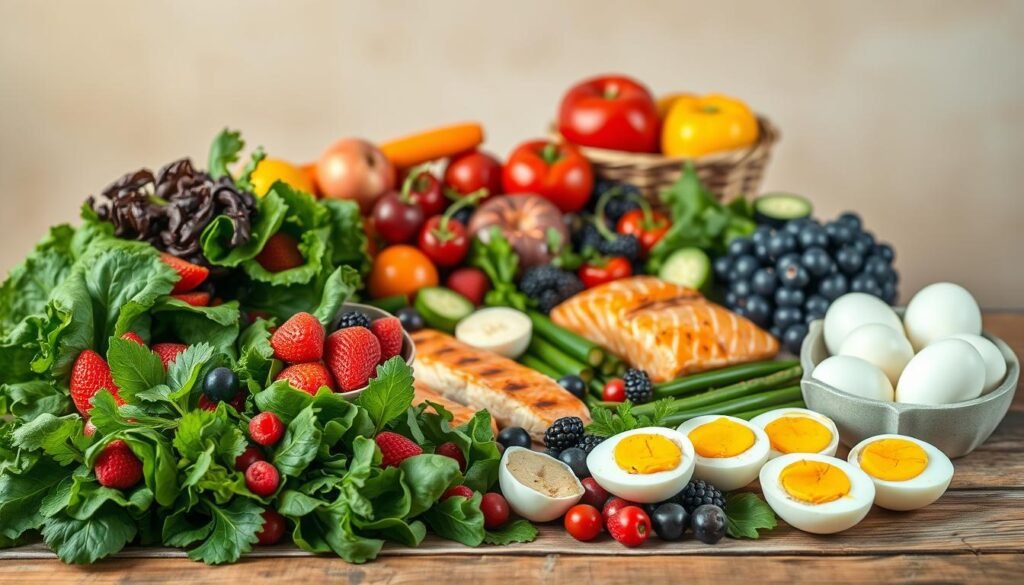
Micronutrient-Rich Foods
Whole, unprocessed foods are key for nutrient density. Leafy greens like spinach and kale are packed with vitamins A, C, and K. Berries are full of antioxidants, and fatty fish like salmon offer omega-3 fatty acids.
Potential Supplement Needs
Even with a balanced diet, some might need supplements on GLP-1 meds. Multivitamins, calcium, and vitamin D are common ones. Always talk to a healthcare provider about what supplements you might need.
Working with Healthcare Providers
Healthcare providers are key in guiding your diet on GLP-1 meds. They can tailor a diet plan, suggest supplements, and check your nutrition. Regular visits are important to keep your diet on track and meet your nutritional needs.
| Food Group | Examples | Key Nutrients |
|---|---|---|
| Leafy Greens | Spinach, Kale | Vitamin A, C, K |
| Berries | Blueberries, Strawberries | Antioxidants, Fiber |
| Fatty Fish | Salmon, Sardines | Omega-3 Fatty Acids |
7-Day Sample Meal Plan for GLP-1 Medication Users
A 7-day meal plan is a great guide for those on GLP-1 meds. It helps make smart food choices. You’ll find breakfast, lunch, dinner, and snack ideas to aid in weight loss and health.
Breakfast Options
Starting with a healthy breakfast is key for GLP-1 users. Here are some ideas:
Quick Protein-Rich Choices
- Greek yogurt with berries and nuts: High in protein and fiber
- Scrambled eggs with spinach: Rich in protein and antioxidants
- Cottage cheese with fruit: Good source of protein and calcium
Make-Ahead Breakfast Ideas
- Overnight oats: Mix rolled oats, milk, and your choice of nuts or seeds, then refrigerate overnight
- Breakfast burrito: Prepare with scrambled eggs, black beans, and cheese, then freeze for later use
- Muffin tin frittatas: Whisk eggs with vegetables and cheese, pour into muffin tins, and bake until set
Lunch Ideas
Lunch should be balanced and satisfying. Here are some suggestions:
Balanced Lunch Formulas
- Protein + Complex Carbohydrate + Healthy Fat: Grilled chicken with quinoa and avocado
- Lean Protein + Vegetables: Turkey lettuce wraps with tomato and mustard
Portion-Controlled Options
- Salad jars: Layer greens, vegetables, and protein in a jar for a quick, healthy meal
- Whole grain pita with fillings: Use lean meats, vegetables, and hummus for a satisfying meal
Dinner Recipes
Dinner should be nutrient-dense and satisfying. Here are some ideas:
One-Pot Nutrient-Dense Meals
- Quinoa and black bean bowl: Cook quinoa and black beans with vegetables and spices
- Grilled salmon with roasted vegetables: Season salmon with herbs and grill, serve with a variety of roasted vegetables
Family-Friendly Adaptations
- Slow cooker chili: Make a large batch of chili that can be reheated for several meals
- Baked chicken with sweet potatoes: A simple, healthy meal that can be adjusted for family preferences
Healthy Snacks
Snacking is key for managing hunger and health. Here are some ideas:
Low-Calorie, High-Satisfaction Options
- Raw vegetables with hummus: Crunchy and satisfying
- Fruit and cheese skewers: A sweet and savory combination
- Protein smoothie: Blend your favorite protein powder with milk or yogurt and fruit
| Meal | Monday | Tuesday | Wednesday |
|---|---|---|---|
| Breakfast | Greek yogurt with berries | Scrambled eggs with spinach | Oatmeal with banana |
| Lunch | Grilled chicken salad | Turkey lettuce wraps | Quinoa and black bean bowl |
| Dinner | Baked salmon with roasted vegetables | Slow cooker chili | Grilled chicken with sweet potatoes |
Transitioning to a GLP-1-Friendly Diet
Starting GLP-1 medication means changing your diet. This helps manage side effects and boosts results. A good diet is key to getting the most out of Ozempic, Wegovy, or Mounjaro.
First Week Adjustments
In the first week, make slow changes to your diet. Start by cutting down on high-sugar foods and drinks. This can lessen side effects like nausea. Eat small, frequent meals to control hunger and keep blood sugar stable.
Gradually Modifying Your Diet
As you get used to it, add more protein, complex carbs, and healthy fats to your meals. Slowly increase fiber with veggies, legumes, and whole grains. This helps your digestion.
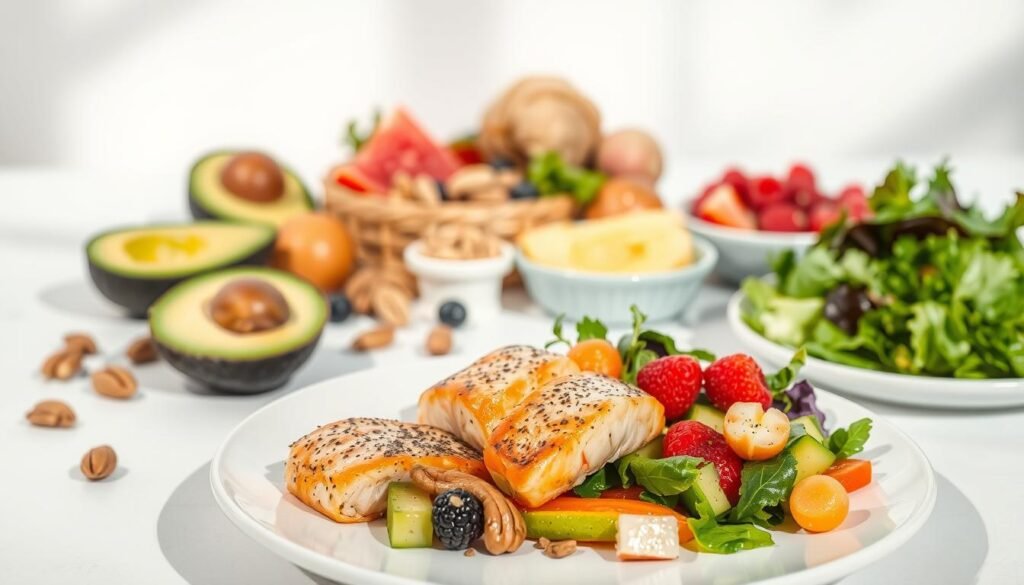
Kitchen Staples to Have on Hand
Having the right foods in your kitchen helps a lot. Keep lean proteins like chicken and fish, colorful veggies, and whole grains like quinoa and brown rice ready. These make it easy to cook healthy meals that work with your GLP-1 treatment.
Tracking Progress and Troubleshooting
To get the most out of GLP-1 meds, tracking your progress is key. Making the right dietary changes is also important. This helps you reach your health goals and avoid side effects.
Food and Symptom Journaling
Writing down what you eat and how you feel is very helpful. It shows patterns and food triggers. This way, you can make better food choices.
When to Adjust Your Eating Plan
If side effects last or weight loss stops, it’s time to change your diet. Talking to a doctor or dietitian can help. They can adjust your diet to fit your needs while on GLP-1 meds like Mounjaro.
Working with Healthcare Providers
Working with your healthcare team is vital for managing your diet on GLP-1 meds. Regular check-ups help track your progress and solve problems. They can also give you mounjaro eating tips and other dietitian advice to improve your diet.
By tracking your progress and making smart changes, you can make your GLP-1 meds work better. This leads to a healthier life.
Conclusion
A well-planned diet is key for those on GLP-1 meds like Ozempic, Wegovy, and Mounjaro. A balanced diet helps you lose weight better and reduces side effects.
To reach your weight loss goals, stick to an ozempic diet plan. Include foods high in nutrients like proteins, complex carbs, and healthy fats. Use wegovy food options to add whole grains, veggies, and legumes. These help control hunger and boost health.
For mounjaro users, eat lean proteins, fiber-rich foods, and healthy fats. This combo with your GLP-1 meds can lead to better weight loss and health.
By following these dietary tips, you can manage your weight loss journey. You’ll get a healthier, more balanced lifestyle.
FAQ
What is a GLP-1 diet, and how does it relate to Ozempic, Wegovy, and Mounjaro?
A GLP-1 diet is a special eating plan for people taking GLP-1 medications like Ozempic, Wegovy, and Mounjaro. It helps with weight loss and reduces side effects. It focuses on eating nutrient-rich foods, controlling portions, and balancing macronutrients.
How do GLP-1 medications affect appetite and digestion?
GLP-1 medications help control hunger and slow down digestion. This makes it easier to stick to a healthy diet and manage weight.
What types of foods should I prioritize on a GLP-1 diet?
Choose foods high in protein, complex carbs, and healthy fats. Include lean meats, plant proteins, whole grains, veggies, legumes, and essential fats in your diet.
Are there specific foods I should limit or avoid while on GLP-1 medications?
Yes, avoid foods high in sugar, processed foods, and too much alcohol. These can make side effects worse or slow down weight loss.
How can I manage common side effects like nausea and constipation through diet?
To fight nausea, try ginger, crackers, or bland foods. For constipation, eat more fiber from fruits, veggies, and whole grains. Drink plenty of water to stay hydrated.
Can I follow a GLP-1 diet without consulting a healthcare provider or dietitian?
While you can make diet changes on your own, getting help from a healthcare provider or dietitian is best. They can give you personalized advice tailored to your health needs.
What are some tips for meal planning and portion control on a GLP-1 diet?
Use visual guides for portion control and plan meals ahead. Eat smaller portions and try meal prep to make healthy eating easier.
How important is hydration on a GLP-1 diet, and what are the signs of dehydration?
Drinking enough water is key. Aim for daily water intake and watch for dehydration signs like headaches, fatigue, or dark urine. Include foods and drinks rich in electrolytes to keep electrolyte balance.
Can I take supplements while on GLP-1 medications, and how do I know if I need them?
Always talk to your healthcare provider about supplements. They can check for nutrient deficiencies and suggest supplements to meet your nutritional needs.